
Pelvic Floor Health Wolverhampton and EMS Chair: A Solution for Mixed Incontinence

Pelvic-floor health is closely connected with bladder and bowel control, but the pelvic floor does more than prevent leakage. These muscles help support the pelvic organs and need to contract and relax in a coordinated way.
Problems can develop when the muscles weaken, become difficult to contract, lose coordination, or become excessively tight. Symptoms can include urinary leakage, urgency, difficulty controlling bowel movements, pelvic discomfort or a feeling of pressure.
This is why pelvic-floor health should not be reduced to a simple question of whether the muscles are “strong” or “weak”. The right approach depends on your symptoms and why they are happening.
Electromagnetic pelvic-floor stimulation is one treatment approach people may encounter when researching pelvic-floor health. Published research exists on magnetic and high-intensity electromagnetic stimulation, including studies involving urinary incontinence. The evidence is still developing, and the treatment used in a research study needs to be distinguished from any particular chair or service.
Electromagnetic Stimulation and Other Treatment Options
| Treatment approach | How it is delivered | Where it may fit |
|---|---|---|
| External electromagnetic stimulation | The person remains seated while externally delivered electromagnetic stimulation produces pelvic-floor muscle contractions. | Magnetic and electromagnetic stimulation have been investigated for urinary incontinence, but the research relates to particular devices and treatment protocols. Results should not be assumed to apply to every electromagnetic chair. |
| Pelvic-floor muscle training | The person learns to contract and relax the pelvic-floor muscles as part of a structured exercise programme, usually with appropriate professional guidance. | NICE recommends supervised pelvic-floor muscle training for at least 3 months as first-line treatment for women with stress or mixed urinary incontinence. |
| Bladder training | A structured programme works on bladder habits and gradually increases the time between feeling the need to urinate and going to the toilet. | NICE recommends bladder training for at least 6 weeks as first-line treatment for women with urgency or mixed urinary incontinence. |
| Medicines | Depending on the type of urinary incontinence, a clinician may consider medicines as part of treatment. | Medication is considered according to the individual’s symptoms, medical history and response to other treatment. |
| Specialist procedures or surgery | Some forms of urinary incontinence can be treated with procedures or surgery when conservative approaches have not provided enough benefit or are unsuitable. | The appropriate procedure depends on the type and cause of the incontinence. A specialist should discuss the potential benefits, risks and alternatives before treatment. |
| Important: Treatment should be matched to the type of urinary incontinence and the individual’s circumstances. Electromagnetic stimulation should not be presented as a replacement for established treatment or as a guaranteed alternative to surgery. | ||
Pelvic Floor Health and the Connection With Incontinence
The pelvic floor is made up of muscles and supporting tissues at the bottom of the pelvis.
These structures support the pelvic organs and help control the bladder and bowel. The muscles also need to relax when you urinate or have a bowel movement.
Good pelvic-floor function is therefore about more than strength. Timing, coordination and the ability to contract and relax are important too.
Pelvic-floor problems can be associated with several different symptoms. NICE’s guidance on pelvic-floor dysfunction includes urinary incontinence, faecal incontinence, bladder or bowel emptying difficulties, pelvic organ prolapse, or sexual dysfunction and chronic pelvic pain among the conditions that may occur alongside pelvic-floor dysfunction.
Pelvic Floor Health and Incontinence: What Is the Connection?
| Area | What the pelvic floor contributes | When problems may occur |
| Bladder control | Helps support urinary continence and works with the bladder and urethra during storage and emptying | Leakage, urgency or difficulty controlling urine |
| Bowel control | Helps contribute to control of the anal canal and bowel contents | Difficulty controlling wind or stool |
| Pelvic organ support | Helps support structures within the pelvis | Pelvic pressure or pelvic organ prolapse |
| Muscle coordination | Allows the muscles to contract and relax when needed | Difficulty relaxing, poor coordination or ineffective contractions |
| Sexual function | Pelvic-floor muscles are involved in sexual function | Some pelvic-floor disorders can be associated with sexual symptoms |
| Daily movement | The muscles work as part of the wider muscular system around the pelvis and trunk | Symptoms may become more noticeable during coughing, lifting or physical activity |
Pelvic-floor symptoms do not automatically mean that the muscles are weak. Some people have difficulty relaxing the muscles, while others have a combination of problems.
That is one reason an assessment can be more useful than assuming that strengthening exercises or a particular treatment will suit everyone.
Understanding the Link Between Pelvic-Floor Health and Mixed Incontinence
Mixed urinary incontinence means that a person experiences both stress urinary incontinence issues and urgency urinary incontinence issues.
Stress leakage happens when activities such as coughing, sneezing, laughing, lifting or exercising place additional pressure on the bladder.
Urgency urinary incontinence is different. Leakage occurs alongside a sudden need to urinate that is difficult to postpone.
Having both patterns can make the symptoms harder to understand because the leakage may happen in completely different situations.
For example, someone might leak while exercising one day and then leak because they could not reach the toilet quickly enough another day.
Treatment therefore needs to take account of both parts of the problem.
For women with stress or mixed urinary incontinence, NICE recommends a supervised pelvic-floor muscle training programme lasting at least three months as first-line treatment. For women with urgency or mixed urinary incontinence, NICE recommends bladder training for at least six weeks.
These recommendations differ because stress and urgency symptoms are not managed in exactly the same way.
Traditional Ways of Looking After Pelvic-Floor Health With Direct Incontinence Wolverhampton
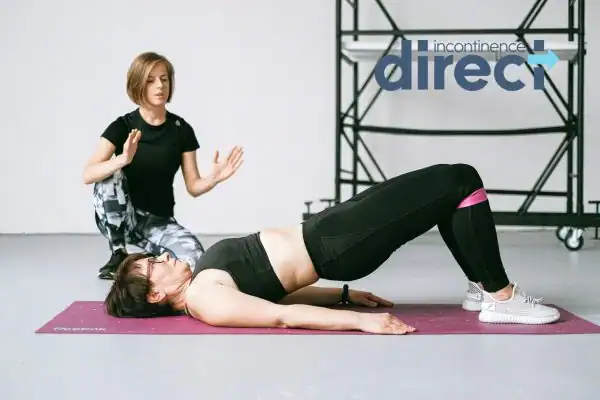
Pelvic-floor muscle training is one of the best-established approaches for managing and preventing some pelvic-floor problems.
The important word is training.
It is not simply a matter of squeezing the muscles whenever you remember. A useful programme should involve the correct muscles, appropriate contractions and relaxation, and enough consistency to give the muscles time to adapt.
NICE recommends that a physiotherapist or other healthcare professional with appropriate expertise supervise pelvic-floor muscle training programmes for women. Supervision includes assessing the person’s ability to contract and relax the pelvic-floor muscles and tailoring the programme to their needs and goals.
The NHS similarly describes pelvic-floor muscle training as part of urinary-incontinence management and advises a structured programme rather than occasional exercises.
Other parts of pelvic-floor care can include:
- Bladder training where urgency or mixed urinary incontinence is present
- Reviewing fluid and caffeine intake
- Addressing constipation
- Maintaining an appropriate level of physical activity
- Managing body weight where relevant
- Working with a pelvic-health physiotherapist
- Treating an underlying medical condition where one has been identified
NICE also advises women with overactive bladder or urinary incontinence associated with pelvic-floor dysfunction to reduce caffeine intake and modify fluid intake if it is too low or too high.
These measures are not alternatives to understanding the cause of symptoms. They form part of a broader approach to pelvic-floor care.
Introducing Electromagnetic Pelvic-Floor Stimulation
Electromagnetic stimulation has been investigated as a way of producing repeated pelvic-floor muscle contractions through externally applied energy.
The attraction is easy to understand. Instead of asking someone to perform every contraction voluntarily, the equipment generates stimulation while the person remains seated.
Published research supports this type of treatment.
A 2025 review included seven studies on high-intensity focused electromagnetic therapy for urinary incontinence in women. Some measures in those studies showed fewer incontinence episodes and better quality-of-life scores after treatment. However, the findings were not entirely consistent, and the review noted substantial differences between studies as well as possible bias. More rigorous research, with consistent outcome measures, is needed before the results can be applied more broadly.
That is useful evidence, but it does not mean that every electromagnetic chair has the same evidence behind it.
The exact technology, stimulation parameters, treatment schedule, participant group and outcomes measured all matter.
How Does an Electromagnetic Chair Work?
During externally delivered electromagnetic stimulation, the person sits on the treatment chair while the equipment produces stimulation intended to cause pelvic-floor muscle contractions.
The contractions are involuntary, meaning the person does not have to consciously perform every repetition.
That makes the treatment different from conventional pelvic-floor muscle training.
It does not make one approach automatically better than the other.
Pelvic-floor muscle training is an active exercise programme in which the person learns to contract and relax their muscles appropriately. Electromagnetic stimulation is a passive form of muscle stimulation.
Researchers have looked at whether stimulation-induced pelvic-floor contractions can help with urinary symptoms or improve pelvic-floor function. Some studies report improvements, although findings are not consistent across the available research. Differences in treatment methods and study design also make the overall evidence difficult to interpret.
What happens during treatment?
The person remains seated while the equipment delivers the stimulation.
The sensation can include muscle contractions or other sensations produced by the stimulation. The exact experience depends on the equipment and its settings.
The treatment is external and does not involve an operation or an implanted device.
The treatment schedule should be based on the equipment and service protocol, not on the assumption that every electromagnetic treatment follows the same course used in a research study.
What Does the Research Say, What Studies Have Found So Far About Electromagnetic Stimulation?
The research is more substantial than a single before-and-after study, but it is not uniform enough to support sweeping claims.
A 2025 review looked specifically at high-intensity focused electromagnetic therapy and included seven studies involving women with urinary incontinence. The authors found fewer reported incontinence episodes and lower scores on a commonly used urinary-incontinence questionnaire in the treatment groups. Changes in pelvic-floor contraction and resting muscle tone were less consistent. The review also noted differences between the studies and possible bias, so the findings need to be interpreted with some care.
More research exists on extracorporeal magnetic stimulation. A 2020 systematic review included 20 studies, although only 12 were suitable for its meta-analysis. The review reported improvements in measures such as leakage, incontinence episodes, and quality of life, but the researchers found considerable variation between studies. A newer review focused specifically on female stress urinary incontinence and included 17 studies involving 1,389 participants. It reported improvements in several measures, found no significant differences in some measures of pelvic-floor muscle strength, and noted that variation and limitations in the available research warrant caution.
A more recent systematic review also examined magnetic stimulation specifically for female stress urinary incontinence. It included 17 studies involving 1,389 participants. The review reported improvements in several outcomes, found no statistically significant difference in some measures of pelvic-floor muscle strength, and noted limitations due to heterogeneity and the quality of the available evidence.
Researchers have studied magnetic and electromagnetic stimulation. Some studies report improvements. At the same time, researchers continue to call for better-designed trials, more consistent protocols and longer follow-up.
What Are the Possible Advantages of a Chair-Based Treatment?
A chair-based approach may appeal to someone who wants an externally delivered treatment rather than an internal device or surgical procedure.
It also offers a different way to produce pelvic-floor contractions than conventional exercises.
Those are practical characteristics of the treatment. They should not be confused with a guarantee of symptom improvement.
| Aspect | Electromagnetic stimulation | Supervised pelvic-floor training |
| Delivery Method | External stimulation while seated | Voluntary muscle contractions performed as part of an exercise programme |
| Contractions Performed | The equipment produces involuntary contractions | The person learns to contract and relax the muscles |
| Supervision | Depends on the private service and equipment | NICE recommends appropriate professional supervision for women undertaking supervised PFMT |
| Evidence | Research has investigated magnetic/electromagnetic stimulation for urinary incontinence | Established treatment approach with guideline recommendations for stress and mixed urinary incontinence |
| Treatment schedule | Varies between devices and research studies | NICE recommends at least 3 months for women with stress or mixed urinary incontinence |
| Individual response | Cannot be predicted from research averages | Also varies between individuals |
| Relationship to other care | Can be considered as a separate treatment approach | Forms part of established pelvic-floor management |
The recommended approach depends on the type of urinary incontinence. For women with stress or mixed incontinence, NICE recommends supervised pelvic-floor muscle training as a first-line treatment. When urgency or mixed incontinence is the main problem, bladder training is recommended for at least six weeks.
Benefits of Maintaining Good Pelvic-Floor Function
Pelvic-floor health is not only about treating leakage after it appears.
NICE recommends pelvic-floor muscle training for women of all ages to help prevent symptoms of pelvic-floor dysfunction and encourages ongoing training over time.
Pregnancy and childbirth are recognised situations in which pelvic-floor support may need particular attention. NICE recommends pelvic-floor muscle training during pregnancy and after birth and identifies several birth-related factors associated with increased risk of pelvic-floor dysfunction.
Age, constipation, smoking, lack of exercise and some other factors are also included among the risk factors described by NICE for women.
That does not mean pelvic-floor problems are inevitable with age or childbirth. It means that there are circumstances in which paying attention to pelvic-floor function becomes particularly relevant.
What to Expect From Electromagnetic Chair Treatment
If you are considering electromagnetic pelvic-floor stimulation, it is reasonable to want to know what an appointment is actually like.
The treatment is delivered while seated. The stimulation produces pelvic-floor muscle contractions without requiring you to perform each contraction yourself.
The exact session length, intensity and number of appointments depend on the equipment and service being used.
Published research cannot be turned into a universal appointment schedule. Different studies have used different treatment frequencies and durations.
For example, research into HIFEM and other magnetic stimulation approaches has used different protocols, which is one reason systematic reviews have called for more standardised treatment programmes.
You should therefore ask the service:
- What type of electromagnetic stimulation is being used?
- How long does an appointment take?
- What treatment schedule is offered?
- What research is available on comparable equipment?
- Are there circumstances in which treatment would not be appropriate?
- Should your symptoms be medically assessed first?
Those questions give you more useful information than a promised number of contractions or a guaranteed treatment outcome.
Who Might Consider Electromagnetic Pelvic-Floor Stimulation?
People consider pelvic-floor stimulation for different reasons.
Some may be dealing with urinary leakage. Others may have urgency, mixed urinary symptoms or concerns about pelvic-floor function after pregnancy or other life events.
A symptom alone does not mean electromagnetic stimulation is appropriate.
A person with urinary leakage may have stress incontinence, urgency incontinence, mixed incontinence or another problem entirely. Someone with pelvic pain may also have pelvic-floor dysfunction, but that does not necessarily mean that strengthening the muscles is the correct approach.
NICE recommends an assessment that considers the person’s symptoms and other possible causes before choosing management.
If your symptoms have not been assessed, particularly if they are new, persistent, or unexplained, it is sensible to discuss them with a GP or appropriate healthcare professional.
When Pelvic-Floor Symptoms Need Medical Assessment
Pelvic-floor symptoms are common, but they should not automatically be attributed to weak muscles.
NICE recommends looking for other possible causes during assessment, including urinary-tract infection, neurological disease, medication effects, diabetes and other medical conditions depending on the symptoms.
For urinary incontinence, a GP may ask about the pattern of leakage, urgency, frequency, night-time urination, fluid intake and medicines. A bladder diary may also form part of the assessment. (NHS)
Seek medical advice if you have:
- New or unexplained urinary leakage
- Blood in the urine
- Pain when passing urine
- Difficulty emptying the bladder
- Repeated urinary infections
- New bowel-control problems
- Persistent pelvic pain
- Symptoms that are getting worse or changing
A private pelvic-floor treatment should not be used as a substitute for investigating symptoms that may have another cause.re seeking a non-invasive, effective solution for pelvic floor weakness, the EMS Chair may be the right choice.
Frequently Asked Questions Around Pelvic Floor Health Wolverhampton
What is the pelvic floor?
The pelvic floor is a group of muscles and supporting tissues at the base of the pelvis. It helps support pelvic organs and contributes to bladder and bowel control.
The muscles need to contract when needed and relax at the appropriate time.
What is mixed urinary incontinence?
Mixed urinary incontinence means having both stress urinary incontinence and urgency urinary incontinence.
Stress leakage can occur with activities such as coughing or exercise, while urgency leakage occurs with a sudden need to urinate that is difficult to hold or postpone.
Can pelvic-floor exercises be done incorrectly?
Yes.
A person may have difficulty identifying the correct muscles or may contract other muscles instead. NICE recommends assessing the ability to contract and relax the pelvic-floor muscles and providing appropriate supervision when pelvic-floor muscle training is prescribed.
Is electromagnetic stimulation the same as electrical stimulation?
No.
They are different forms of stimulation.
This distinction matters when reading clinical evidence. NICE has specific recommendations on electrical stimulation for urinary symptoms, and those recommendations should not automatically apply to every form of magnetic or electromagnetic stimulation.
Does that mean an EMS chair will improve everyone’s symptoms?
No outcome can be guaranteed for an individual.
Clinical research reports what happened to groups of participants under particular treatment conditions. Equipment, symptoms, treatment schedules, and individual circumstances may differ in practice.
Can an EMS chair replace pelvic-floor exercises?
Not as a general replacement.
Pelvic-floor muscle training is an established treatment for urinary incontinence, and NICE recommends a supervised programme for women with stress or even mixed urinary incontinence.
An EMS chair should not be presented as an alternative to pelvic-floor muscle training. NICE recommends supervised pelvic-floor muscle training as first-line treatment for women with stress or mixed urinary incontinence. The suitability of any additional treatment will depend on the type of incontinence, the symptoms being treated, and the person’s clinical circumstances.
Is electromagnetic pelvic-floor stimulation suitable for everyone?
No treatment should be assumed to suit everyone.
Consider the equipment’s safety information and the person’s medical circumstances. If you have a medical condition, an implanted device, or another concern that may affect treatment, seek appropriate advice before proceeding.
Can pelvic-floor problems cause urinary incontinence?
Pelvic-floor dysfunction can be associated with urinary incontinence, but leakage does not automatically mean that the pelvic floor is weak.
Urinary incontinence has different forms and causes, so you need to consider symptoms in context.
Are pelvic-floor exercises worthwhile?
Pelvic-floor muscle training is an established part of managing and preventing some pelvic-floor problems.
For women with stress or mixed urinary incontinence, NICE recommends a supervised programme lasting at least three months.
What is an electromagnetic pelvic-floor chair?
It is a chair-based system that uses externally delivered electromagnetic stimulation to produce pelvic-floor muscle contractions while the person remains seated.
Different devices use different technologies and treatment parameters, so identify the equipment being offered before applying research findings.
Has electromagnetic stimulation been studied for urinary incontinence?
HIFEM has been investigated as a treatment for urinary incontinence in women. A 2025 systematic review included seven studies and reported fewer incontinence episodes, along with improvements in the ICIQ-UI SF and some quality-of-life measures among participants receiving HIFEM. The evidence still has limitations. The studies varied considerably, and the review identified possible bias, so further research with stronger study designs and standardised outcome measures is needed.
How long does an EMS chair session take?
No single session length applies to every electromagnetic treatment system.
Research studies use different protocols, and a private service’s treatment should follow the equipment’s specifications.
How many sessions will I need?
There is no universal number.
Published studies use different treatment schedules, so a research protocol should not automatically be presented as the required course for everyone.
Can electromagnetic stimulation help with bowel control?
Magnetic and electromagnetic stimulation have been investigated in pelvic-floor disorders, but evidence for one symptom or intervention should not automatically be transferred to another.
If you have faecal incontinence, assess the cause and base treatment on the underlying problem.
Can men have pelvic-floor problems?
Yes.
Pelvic-floor problems are not limited to women. Men can also experience urinary leakage and other pelvic-floor symptoms, including after prostate treatment.
The assessment and treatment depend on the symptoms and their cause.
Speak To A Consultant Today!
If you are exploring private electromagnetic pelvic-floor stimulation, you can contact Incontinence Direct to discuss the service and practical arrangements.
Understanding the treatment is only one part of the decision. Your symptoms, medical history and other available treatment options also matter.
If you have not had persistent or unexplained pelvic-floor symptoms assessed, consider speaking with an appropriate healthcare professional.
Sources & Further Reading
- NHS — Urinary incontinence
- NHS — Urinary incontinence: non-surgical treatment
- NICE — Pelvic floor dysfunction: prevention and non-surgical management (NG210)
- NICE — Urinary incontinence and pelvic organ prolapse in women: management (NG123)
- PubMed — Noninvasive High-Intensity Focused Electromagnetic Therapy in Women With Urinary Incontinence: A Systematic Review and Meta-Analysis
- PubMed — Effects of Extracorporeal Magnetic Stimulation on Urinary Incontinence: A Systematic Review and Meta-Analysis
- PubMed — Rehabilitation Effect of Magnetic Stimulation on Female Stress Urinary Incontinence: A Systematic Review and Meta-Analysis
- PubMed — Comparisons of Approaches to Pelvic Floor Muscle Training for Urinary Incontinence in Women
Medical Information Notice
This article provides general information about pelvic-floor health, urinary symptoms and electromagnetic stimulation.
It does not diagnose pelvic-floor dysfunction or determine whether a particular treatment is appropriate for an individual.
If you have new, persistent, worsening or unexplained symptoms, seek advice from an appropriate healthcare professional.
Individual responses to treatment vary, and research findings should not be interpreted as a guarantee of outcome.
Last Reviewed: September 2026 | Incontinence Driect Wolverhampton Editorial Team